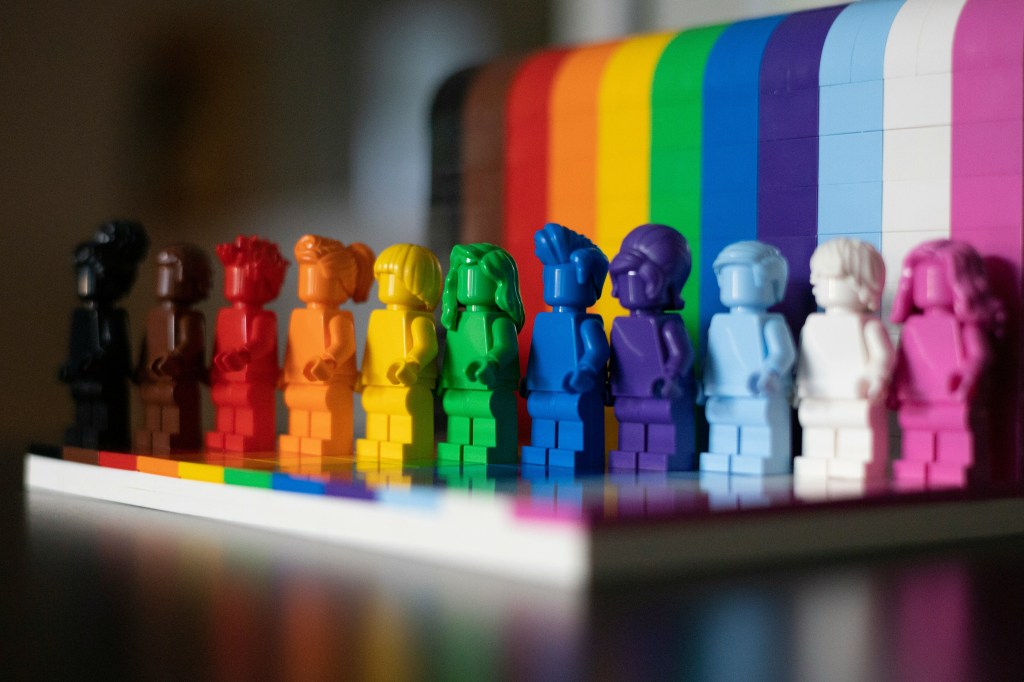
The old phrase Sticks and Stones May Break My Bones but Words Can Never Hurt Me may be heard on many playgrounds, but the truth is that words can inflict significant harm when used out of ignorance or malice. Unfortunately, for many LGBTQ+ youth, schools are unwelcoming, and often harmful environments.
In 1999, a group of concerned educators formed the organization GLSEN (Gay, Lesbian & Straight Education Network) in order to support this population of learners and offer guidance to educators. This organization is an incredibly valuable resource which provides information and strategies for creating inclusive school environments. GLSEN also conducts periodic national surveys to collect responses regarding school climates from LGBTQ+ identified students ages 13-21. The most recent survey was conducted in 2019, and had over 16,000 student participants on a national scale.
Below is a small sampling of statistics from that survey which paint a dismal picture of the hardships LGBTQ+ youth face in schools each day. This data is being shared in order to draw attention to the daily lived reality for this population of learners and to encourage educators to recognize the impacts that language has on these students’ lives.
98.8% of students reported hearing ‘gay’ used in a derogatory manner and over 91% reported feeling distressed due to this language (GLSEN, 2019).
96.9% of students have heard the phrase ‘no homo’ being used in school environments (GLSEN, 2019).
95.2% of students have heard other derogatory language such as ‘fag’ and ‘dyke’ in school environments (GLSEN, 2019).
91.8% of students have heard negative remarks about their gender expression at school (GLSEN, 2019).
87.4% of students reported hearing transphobic language being used in school environments (GLSEN, 2019).
52.4% of students have heard teachers or other school staff make homophobic remarks (GLSEN, 2019).
66.7% of students have heard teachers or other school staff make negative remarks about gender expression (GLSEN, 2019).
13.7% of students reported that school staff intervened most of the time or always when hearing homophobic language (GLSEN, 2019).
9% of students reported school staff intervened most of the time or always when hearing negative remarks about gender expression (GLSEN, 2019).
86.3% of LGBTQ+ students reported being harassed or assaulted at school because of their gender / gender expression / sexuality / or perceived sexuality (GLSEN, 2019).
These are only a handful of the alarming statistics reported in GLSEN’s National Climate Surveys which contribute to disproportionately high risk factors for this population of students. Negative school environments contribute to lower feelings of self-worth and belonging, lower participation rates in school activities, lower attendance, higher rates of skipping school or dropping out, lower academic success, and increased challenges to mental health (GLSEN, 2019). These factors have life-long consequences for the impacted students, and in some cases, have life-ending consequences as well (GLSEN, 2019; HRC, 2020).
Click here to see the full 2019 Climate Survey, or visit https://www.glsen.org/ for additional resources centered around LGBTQ+ inclusion in education.
GLSEN. (2021). Homepage. GLSEN. https://www.glsen.org/.
Human Rights Campaign. (2020). 2020 state equality index. HRC Digital Reports. https://reports.hrc.org/2020-state-equality-index?_ga=2.250670724.328757996.1628441848-837868236.1628441848&_gac=1.121367930.1628441848.CjwKCAjwgb6IBhAREiwAgMYKRjx7hpu2RGWaH5SMT-8JkwBKoRZeGIWv291a6k_Kjm1ks0Pn64evVRoCyYIQAvD_BwE.
 Gay-Ok